为全面提升人民健康水平,完善重大疾病防治策略,医学创新与国际协作已成为驱动临床进步的关键力量。在此背景下,2026年4月24日至25日,由中国医疗保健国际交流促进会血液学分会主办,血液系统疾病国家临床医学研究中心、北京大学血液病研究所承办的“2026北京国际造血干细胞移植学术会议(AOT)”于北京隆重召开。本届大会以“移植的艺术”为核心主题,汇聚全球血液学领域的顶尖学者,深入探讨造血干细胞移植领域的前沿技术创新与发展趋势。会议期间,《肿瘤瞭望-血液时讯》特邀Donal P. McLornan教授接受采访,围绕骨髓增生异常综合征/骨髓增殖性肿瘤(MDS/MPN)患者移植治疗中的关键临床问题,分享其学术观点与实践经验,以期为临床诊疗提供有益参考。
在骨髓增生异常综合征(MDS)和骨髓增殖性肿瘤(MPN)中,异基因造血干细胞移植(allo-HSCT)是目前唯一具有治愈潜力的治疗手段。基于现行指南,您如何把握不同风险分层患者的移植时机?在真实世界中,指南推荐与临床实践之间是否存在差距?
Donal P. McLornan教授:骨髓增生异常综合征/骨髓增殖性肿瘤(MDS/MPN)患者群体在接受造血干细胞移植方面面临诸多挑战。这类疾病属于罕见病,在欧盟人群中的发病率约为十五万分之一,且患者通常年龄较大、身体状况较差,导致可用于支持移植决策的临床数据较为有限。此外,这类疾病在分子生物学特征及临床表型上均表现出高度异质性。就非慢性粒细胞白血病重叠的疾病类型而言,移植主要适用于两类患者:一是伴有中性粒细胞增多的MDS/MPN,二是非特指型MDS/MPN,且所有患者均建议进行分子遗传学检测。
若患者生物学年龄和实际年龄均适合、身体状况良好,且能找到合适供者,则应推荐进行移植。这是因为伴有中性粒细胞增多的MDS/MPN患者中位总生存期通常不足18个月,而非特指型重叠综合征的预后往往与慢性粒单核细胞白血病相似。目前,国际临床指南的推荐与实际临床实践之间常存在一定差距,建议临床医生参考欧洲血液和骨髓移植学会(EBMT)关于移植最佳时机的指导建议,以优化治疗决策。
In patients with myelodysplastic syndromes (MDS) and myeloproliferative neoplasms (MPN), allogeneic hematopoietic stem cell transplantation (allo-HSCT) remains the only potentially curative treatment. Based on current guidelines, how do you determine the optimal timing of transplantation for patients across different risk strata? In real-world practice, is there a gap between guideline recommendations and clinical implementation?
Patients with myelodysplastic syndromes/myeloproliferative neoplasms (MDS/MPN) face numerous challenges when undergoing hematopoietic stem cell transplantation. This disease category is rare, with an estimated incidence in the European Union population of about 1 in 150,000, and patients are often older and in poor physical condition, resulting in limited clinical data to support transplant decision-making. Furthermore, these diseases exhibit high heterogeneity both at the molecular biological level and in clinical phenotypes. For disease types that do not overlap with chronic myeloid leukemia, transplantation is primarily suitable for two groups of patients: MDS/MPN with neutrophilia and MDS/MPN, unclassifiable. Molecular genetic testing is recommended for all patients.
Transplantation should be recommended if the patient is suitable in terms of both biological and chronological age, is in good general health, and a suitable donor can be found. This is because the median overall survival for patients with MDS/MPN with neutrophilia is typically less than 18 months, and the prognosis for unclassifiable overlap syndromes often resembles that of chronic myelomonocytic leukemia. A gap often exists between recommendations in international clinical guidelines and real-world practice. It is advised that clinicians refer to guidance from the European Society for Blood and Marrow Transplantation (EBMT) on the optimal timing for transplantation to optimize treatment decisions.
在MDS/MPN患者的移植过程中,复发、移植物抗宿主病(GVHD)及移植相关死亡仍是主要挑战。您如何理解这些风险之间的相互作用?目前在预处理方案优化、供者选择以及移植后管理方面,有哪些关键策略可以改善整体结局?
Donal P. McLornan教授:针对MDS/MPN患者群体,无论是非移植还是移植领域的临床研究均相对有限。在预处理方案的优化方面,目前普遍采用减低强度预处理,且常选择其中强度较高的方案。与中国等国家相比,欧盟更常采用人类白细胞抗原全相合或不全相合的非亲缘供者,而非单倍体相合供者移植。然而,若综合观察各类供者类型,移植后前两年的复发率仍可达40%至45%。
因此,对于移植前疾病进展迅速的患者,可考虑在移植前应用去甲基化药物或针对脾肿大的JAK抑制剂进行治疗。同时,应尽快完成各类供者的筛选,接受强度更高的减低强度预处理方案,并在移植后考虑采用去甲基化药物或JAK抑制剂进行维持治疗。
During transplantation in MDS/MPN patients, relapse, graft-versus-host disease (GVHD), and transplant-related mortality remain major challenges. How do you interpret the interplay among these risks? What key strategies in conditioning regimen optimization, donor selection, and post-transplant management can improve overall outcomes?
For the MDS/MPN patient population, clinical research is relatively limited in both non-transplant and transplant settings. Regarding the optimization of conditioning regimens, reduced-intensity conditioning is commonly used, often selecting regimens with higher intensity within this category. Compared to countries like China, the EU more frequently uses matched or mismatched unrelated donors based on human leukocyte antigen compatibility, rather than haploidentical donors. However, when observing all donor types, the relapse rate within the first two years post-transplantation can still reach 40% to 45%.
Therefore, for patients with rapidly progressing disease before transplantation, consideration can be given to using hypomethylating agents or JAK inhibitors targeting splenomegaly as pre-transplant therapy. Simultaneously, donor screening across all types should be expedited, employing higher-intensity reduced-intensity conditioning regimens, and post-transplant maintenance therapy with hypomethylating agents or JAK inhibitors should be considered.
随着新型药物(如JAK抑制剂、去甲基化药物等)的应用,移植前桥接治疗及移植后维持策略正不断发展。您如何看待这些治疗手段在优化移植路径中的作用?未来在个体化治疗和策略整合方面,最有前景的方向是什么?
Donal P. McLornan教授:对于具有明显增殖性重叠综合征、症状显著、存在突出超敏炎症反应及显著脾肿大的患者,应尽可能考虑使用JAK抑制剂。在选择时,宜考虑那些不仅抑制JAK1与JAK2,同时具有其他特性,例如抑制ACVR1的药物,从而兼顾脾脏相关症状、全身性症状及贫血的针对性治疗。此类JAK抑制剂包括莫洛替尼(Momelotinib)与帕克替尼(Pacritinib),未来的临床试验应重点关注这些药物。若患者在移植前主要表现为发育异常表型,则去甲基化药物可发挥作用。
然而,当前治疗面临的核心挑战仍是复发问题。因此,在移植后维持治疗方面,可考虑采用地西他滨或阿扎胞苷等去甲基化药物联合维奈克拉的方案,并依据患者的具体表型评估是否加用JAK抑制剂。鉴于此类疾病属于罕见病,EBMT每年仅能登记约150例病例,因此有必要开展全球性、前瞻性的临床试验,并制定全球协调的战略,以统一未来的预处理方案平台和维持治疗策略。最后,当前体系中的一个关键不足在于生物标志物的开发,即在治疗前即获得能够明确最佳治疗路径的特征性标签,这将帮助我们更精准地匹配方案,最终为MDS/MPN患者带来更优治疗结局。
With the advent of novel agents, such as JAK inhibitors and hypomethylating drugs, pre-transplant bridging therapies and post-transplant maintenance strategies are evolving. How do you view the role of these treatments in optimizing the transplantation pathway? Looking ahead, what are the most promising directions for individualized therapy and integrated strategy development?
For patients with pronounced proliferative overlap syndrome, significant symptoms, prominent hyperinflammatory responses, and marked splenomegaly, the use of JAK inhibitors should be considered whenever possible. When selecting, preference should be given to JAK inhibitors that target not only JAK1 and JAK2 but also possess other properties, such as ACVR1 inhibition, thereby addressing splenic-related symptoms, systemic symptoms, and anemia. Such JAK inhibitors include momelotinib and pacritinib, and future clinical trials should focus on these agents. If the patient presents primarily with a dysplastic phenotype before transplantation, hypomethylating agents can play a role.
However, the core challenge in current treatment remains relapse. Therefore, for post-transplant maintenance therapy, a regimen combining hypomethylating agents such as decitabine or azacitidine with venetoclax can be considered, with the decision to add a JAK inhibitor based on the specific phenotype of the patient. Given that these are rare diseases, with the EBMT registering only about 150 such cases annually, there is a necessity for global, prospective clinical trials and the development of a globally coordinated strategy to standardize future conditioning platforms and maintenance therapy strategies. Finally, a key gap in the current system lies in the development of biomarkers—that is, obtaining a characteristic signature before treatment that can define the optimal therapeutic path. This will help match therapies more precisely and ultimately lead to better treatment outcomes for MDS/MPN patients.
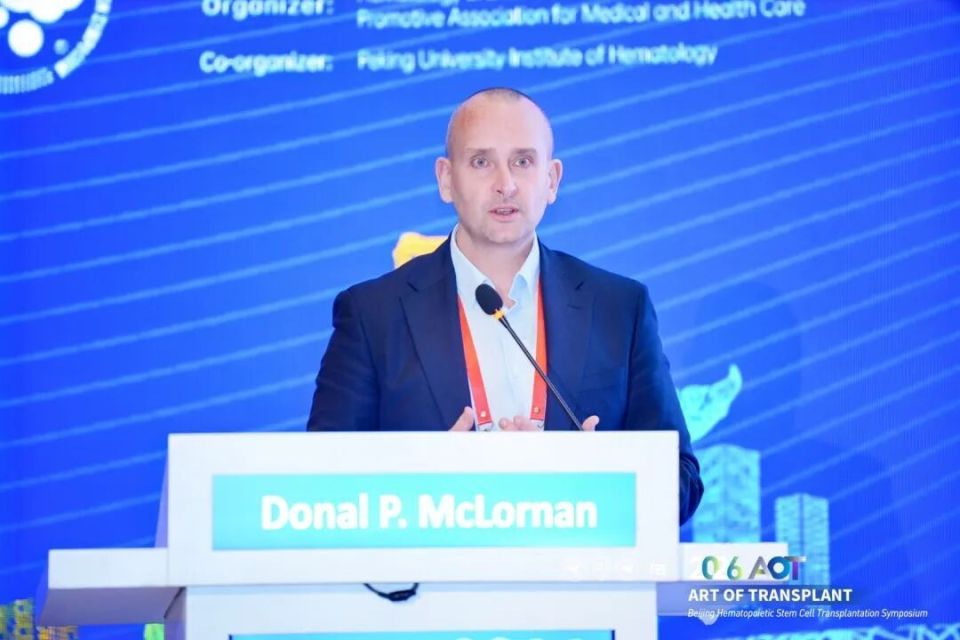
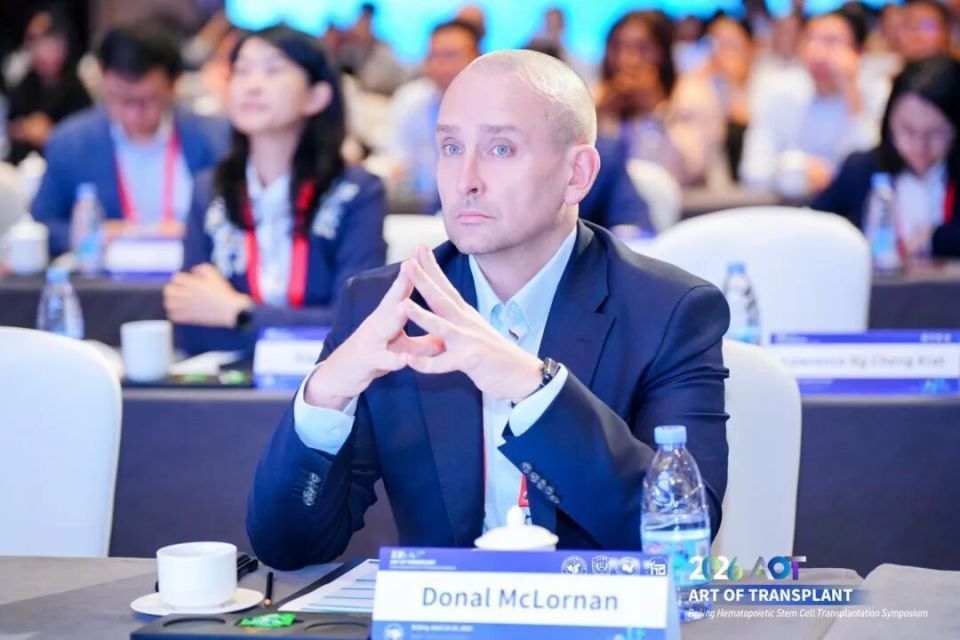
专家简介

Donal P. McLornan 教授
伦敦大学学院医院
伦敦大学学院医院骨髓增殖性肿瘤、异基因移植及CAR-T团队的顾问医生
他的转化与临床研究及临床试验工作主要聚焦于骨髓纤维化、MDS/MPN重叠综合征及异基因干细胞移植领域,并就此主题发表了大量论著。
他在国内外担任多项重要职务,当选为欧洲血液与骨髓移植学会慢性恶性肿瘤工作组主席及该学会科学委员会联合主席。同时,他现任全英范围内的英国血癌协会MPN临床试验组主席,该网络在英国拥有超过70名成员。